
海外回国VPN免费?2025最新指南:选对加速器,无缝刷国内剧、玩国服游戏不卡顿

As an overseas student in London, I’ve been there – trying to watch the latest episode of “The Longest Promise” on iQiyi, only to get the dreaded “region not supported” message. Or when my mom sends a WeChat Moments video that takes 10 minutes to load, or I can’t join my friends’ Honor of Kings team because the server is locked to China. Like many of us, I first searched for “海外回国vpn免费” hoping to find a quick fix, but soon realized free options come with more headaches than solutions. This guide will break down why geo-restrictions exist, the risks of free and cracked VPNs, compare two popular tools (Quickback and OurPlay), and show you how to choose a reliable accelerator that lets you access domestic resources seamlessly.
Why do overseas users face region restrictions?
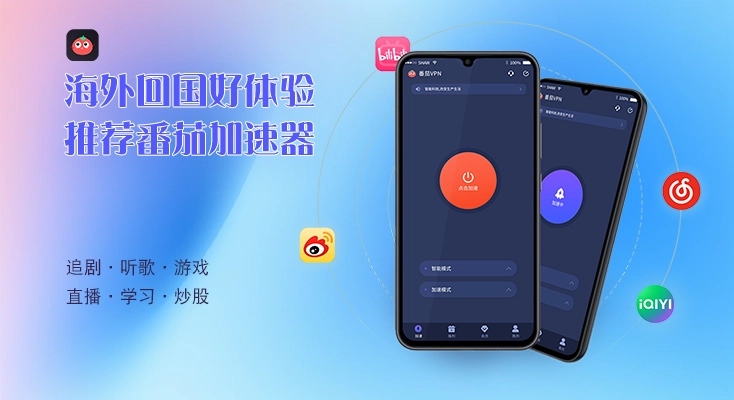
Most Chinese apps and websites use geo-blocking to comply with content licensing laws or regional regulations. For example, streaming platforms like iQiyi or Tencent Video only have rights to show certain content in China, so they block access from overseas IP addresses. Similarly, Chinese game servers restrict access to players with domestic IPs to prevent cheating and maintain server stability. Even everyday apps like Alipay or WeChat Pay might limit some functions (like bill payments) if you’re using an overseas IP. So, to bypass these restrictions, you need an accelerator that routes your internet traffic through a server in China, making it look like you’re accessing from within the country.
Is “海外回国VPN免费” really reliable?
When I first started looking for solutions, I tried a dozen free VPNs. Most of them were slow – I could barely load a 720p video, let alone 4K. Some had constant ads popping up in the middle of my shows, and others disconnected every 10 minutes. Worse, I later found out that many free VPNs sell user data to third parties to make money, which is a huge security risk especially if you’re using them to access sensitive apps like online banking. Some users, frustrated with free VPNs’ limitations, turn to pc破解vpn – cracked versions of paid accelerators. But let’s be honest: these are ticking time bombs. Last month, a friend of mine downloaded a cracked VPN for his Windows laptop to play League of Legends China server. Within a week, his account was banned for “unauthorized third-party tool use”, and his laptop got infected with malware that stole his Alipay password. Cracked VPNs often lack security updates, and their creators might log your data or inject ads. It’s simply not worth the risk.
Quickback和OurPlay哪个好?A side-by-side comparison
After ditching free and cracked options, I tried two popular tools: Quickback and OurPlay. Let’s break down their pros and cons. OurPlay is a favorite among mobile gamers. It’s designed specifically for playing Chinese mobile games – it pre-installs games, optimizes connections, and even fixes compatibility issues for overseas users. I used it to play Genshin Impact China server, and the latency was pretty low (around 30ms). But the problem? It only works on Android and iOS. So when I wanted to watch Tencent Video on my Mac, I had to switch to another tool. Also, its streaming support is limited – it doesn’t have dedicated lines for platforms like Bilibili or Youku. Quickback, on the other hand, supports more platforms: Windows, Mac, Android, and iOS. I liked that I could use one account on my laptop and phone. But its game acceleration wasn’t as smooth as OurPlay’s. I tried playing Honor of Kings with Quickback, and I kept getting disconnects during intense team fights. Also, its server selection was a bit confusing – I had to manually switch between nodes to find a fast one. So which one is better? It depends on your needs. If you’re a mobile-only gamer, OurPlay is a solid choice. If you need multi-platform support but don’t care as much about game optimization, Quickback works. But neither tool checked all my boxes – until I found Tomato Accelerator.
How to choose the best回国加速器?Key factors to consider
When looking for a reliable accelerator, here are the key factors I prioritize – and how Tomato Accelerator stacks up against them. First, global node coverage. You need an accelerator with servers in multiple countries so it can find the fastest route to China. Tomato has nodes in over 35 countries (from the US to Australia), so no matter where you are, it can connect you to a nearby server that links to China with minimal latency. For example, when I’m in Paris, it automatically picks a node in Frankfurt that gives me a 25ms ping to iQiyi. Second, multi-platform support. I use a Mac for work, an iPhone for daily use, and an Android tablet for watching shows. Tomato supports all four major platforms (Android, iOS, Windows, Mac) and lets you use one account on up to 5 devices at the same time. So I can watch a drama on my tablet while my roommate uses the same account to play PUBG Mobile China on his PC – no conflicts, no extra costs. Third, stable and unlimited traffic. Free VPNs often throttle your speed after 1GB, but Tomato offers unlimited traffic with smart分流. Smart分流 means it only accelerates domestic apps (like WeChat or iQiyi) while leaving your local internet (Google, Spotify) untouched. So I can browse international websites at full speed while streaming a show on Bilibili. Also, Tomato has dedicated lines for both games and videos – 100M独享带宽 ensures that 4K content loads instantly, and my Honor of Kings matches have less than 20ms latency. Fourth, security. This is non-negotiable. Tomato uses AES-256 encryption (the same standard used by banks) and专线传输 (dedicated lines) to protect your data. I use it to access my Chinese bank app and WeChat Pay, and I never worry about my personal information being stolen. Fifth, after-sales support. Once, I had an issue where I couldn’t access my Chinese university’s portal. I contacted Tomato’s support team via live chat at 2 AM London time, and they fixed the problem in 10 minutes. Their professional tech team is available 24/7, which is a lifesaver for overseas users in different time zones. All these features make Tomato a standout choice for anyone looking to access domestic resources seamlessly.
Step-by-step guide to set up Tomato Accelerator
Setting up Tomato is easy – even if you’re not tech-savvy. Here’s how I did it: 1. **Download the app**: Go to Tomato’s official website (tomatoaccelerator.com) and pick the version for your device. For mobile users, you can also get it from the App Store or Google Play (though sometimes you might need to switch to a Chinese region, but the website has a direct download link if that’s a hassle). 2. **Sign up**: Create an account with your email or phone number. They offer a 3-day free trial, so you can test all features before paying. 3. **Connect**: Once logged in, the app will automatically recommend the best server for you (thanks to its smart node selection). Just click “Connect” and wait 2 seconds – you’re now connected to a Chinese server. 4. **Optimize for your needs**: If you’re a gamer, go to the “Game” tab and pick your favorite game (like Honor of Kings or Genshin Impact). Tomato has dedicated lines for these games, so you’ll get the lowest possible latency. For streaming, the “Video” tab has optimized servers for iQiyi, Tencent Video, and Bilibili. That’s it – no complicated settings, no technical jargon. Just click and go.
Final thoughts: Stop settling for unreliable tools
Going back to the initial question – is “海外回国vpn免费” a good idea? Probably not. Free VPNs are slow and risky, and pc破解vpn can get you banned or hacked. When comparing Quickback and OurPlay, both have their strengths but fall short in some areas. Tomato Accelerator, however, checks all the boxes: global nodes, multi-platform support, unlimited stable traffic, smart routing, top-notch security, and 24/7 support. Whether you’re a student wanting to watch domestic dramas, a worker needing to access Chinese apps for work, or a gamer wanting to join friends back home, Tomato lets you access all your favorite domestic resources seamlessly. Stop wasting time on tools that don’t work – give Tomato a try and get back to the things that matter.